During the winter, heating is indispensable for home comfort, but its constant use can lead to increased costs. Controlling energy consumption is therefore now a necessity, and thermostatic valves are a concrete tool to achieve this. But how do they work? Let's find out.

What are thermostatic valves and how do they work?

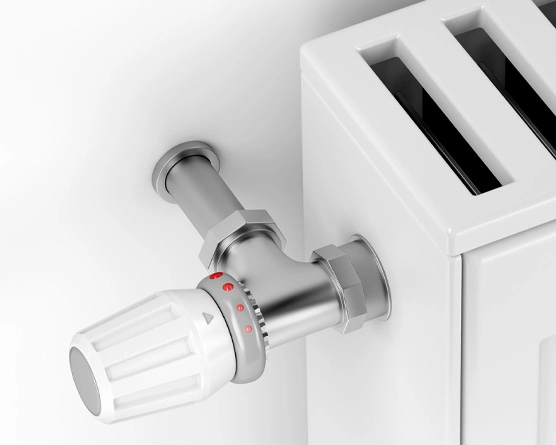
Thermostatic valves are small knobs installed on radiators, which automatically adjust the amount of hot water circulating inside them according to the desired temperature in the room. They therefore allow different temperatures to be set in each room, optimising thermal comfort and reducing energy waste. Their operation is based on a mechanism composed of a few key elements:

  • Graduated knob: allows you to set the desired temperature (usually on a scale of 0 to 5, with 0 corresponding to the total switching off of the radiator);

  • Thermostatic sensor: can be filled with liquid, gas or wax and adjusts the valve opening according to the temperature detected;

  • Valve body: physically regulates the flow of hot water in the radiator;

  • Shutter: closes or opens water passage depending on the expansion of the thermostatic sensor.

When the set temperature is reached, the thermostatic sensor closes the hot water passage, preventing waste. If the outside temperature drops, however, the valve body opens to increase the heat. 


Traditional manual valves only allow the water flow to be opened or closed manually, without any control over the room temperature: the radiator remains on as long as the valve is open, regardless of the heat already present in the room. Thermostatic valves, on the other hand, automatically regulate the water flow according to the detected temperature, acting autonomously and more precisely.

The advantages of thermostatic valves for energy saving

Thermostatic valves offer numerous benefits, both economically and environmentally: 

  • Reduced energy consumption: the installation of thermostatic valves allows more efficient heating management, reducing energy consumption by up to 20%.

  • Improved thermal comfort: thermostatic valves allow a constant and pleasant temperature to be maintained in each room, adapting to the specific needs of each one.

  • Individual temperature control: different temperatures can be set in each room, depending on use and personal preferences.

  • Contribution to environmental sustainability: by reducing energy consumption, CO₂ emissions are reduced, contributing to the fight against climate change.

Boiler maintenance with Enel?
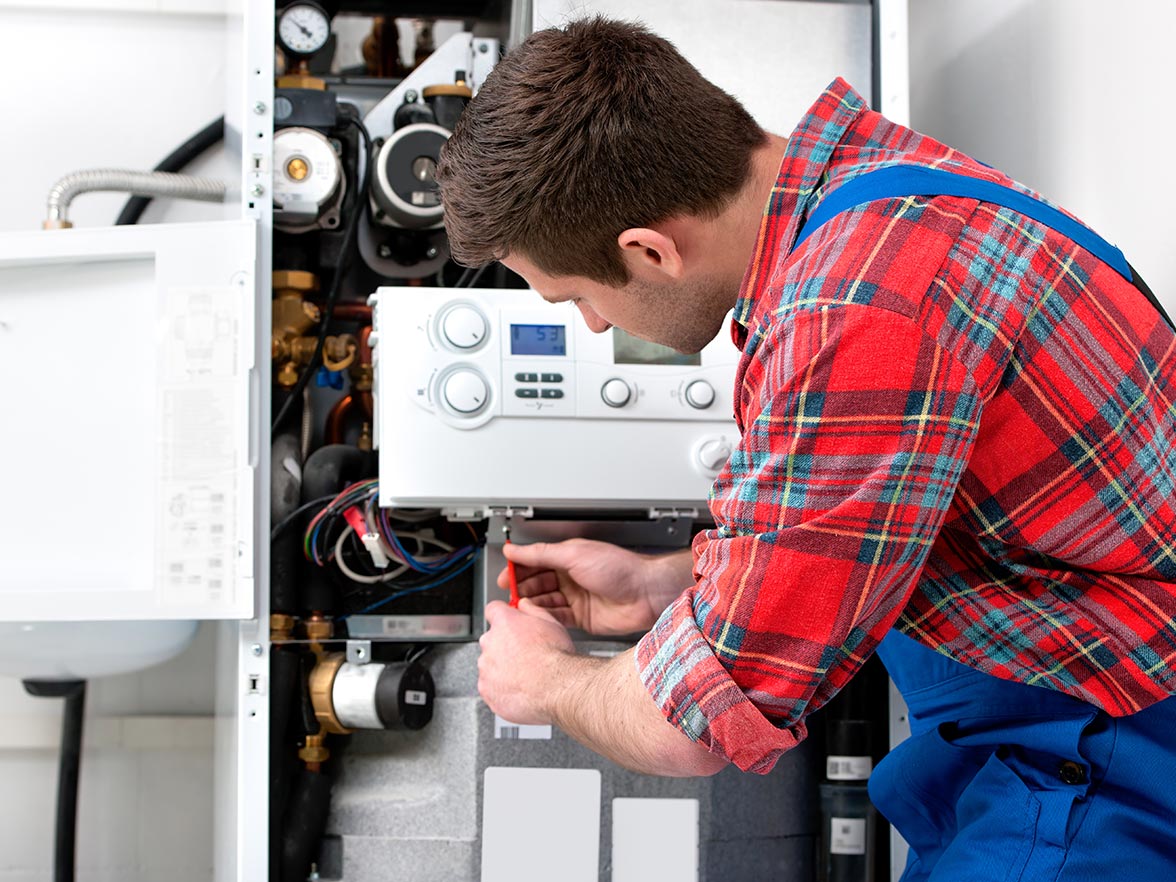
Yes! Enel also supports you with boiler maintenance services.

Available types of thermostatic valves

There are different types of thermostatic valves, designed to suit different needs and technologies, from manual control to more advanced and connected control. There are three main ones:

Mechanical thermostatic valves
Electronic thermostatic valves
Smart thermostatic valves

Mechanical thermostatic valves

They are the most common and easiest to use. Equipped with a graduated knob, they allow the temperature to be adjusted on a scale (usually from 0 to 5) corresponding to the different desired heat levels. The internal mechanical sensor expands or contracts depending on the ambient temperature, thus regulating the water flow in the radiator. They are cheap, reliable and do not require a power supply, however they cannot be programmed.

Electronic thermostatic valves

They integrate a digital display and more precise programming. Unlike mechanical valves, they allow specific times and temperatures to be set during the day, further improving energy efficiency. They are battery-operated and offer more flexibility, especially in environments with changeable habits. They allow more precise regulation than mechanical valves, but control remains local (on the individual valve), without remote management.

Smart thermostatic valves

They connect via Wi-Fi or Bluetooth and can be managed remotely using a smartphone app, voice assistant, or home automation system. They are battery-operated and, in addition to advanced programming, often include features such as automatic habit learning and consumption monitoring. They allow multi-zone management, i.e. the possibility to set different temperatures for each room directly from your device. They are more expensive, but ideal for those who want total, customised control of their system.

Regulatory obligations and tax incentives

Thermostatic valves are not only a smart choice to reduce energy consumption, but also an obligation under Italian law for buildings with central heating. In Italy, in fact, the installation of thermostatic valves has been compulsory since 2017, as provided for by Legislative Decree. 102/2014 and the subsequent Legislative Decree. 141/2016 implementing the European Directive 2012/27/EU on energy efficiency.


Failure to install thermostatic valves, where compulsory, results in penalties of between EUR 500 and EUR 2,500 per non-compliant building unit. These penalties are applicable to the property owners or condominium administrators responsible for the installation. However, exclusions from the obligation are provided for in cases of technical impossibility of installation or economic inefficiency, which must be described and justified by means of a technical report drawn up by a qualified professional.


In order to promote energy efficiency, there are also two main tax breaks available for the installation of thermostatic valves:

  • Ecobonus: for the installation of advanced thermoregulation systems, such as thermostatic valves, when combined with the replacement of class A condensing boilers, allows a tax deduction of 36% (raised to 50% for main dwellings) for expenses incurred in 2025, reduced to 30% (36% for main dwellings) in 2026 and 2027.

  • Renovation Bonus: for the installation of thermoregulation systems, including thermostatic valves, a tax deduction of 36% (increased to 50% for main dwellings) is available for expenses incurred in 2025 on a maximum of €96,000, reduced to 30% (36% for main dwellings) in 2026 and 2027, again with a maximum of €96,000.

For more information on the requirements for accessing the incentives, visit the pages dedicated to the Ecobonus and the Renovation Bonus on the official website of the Italian Revenue Agency.