

Bonus Casa 2025: incentives for photovoltaic panels
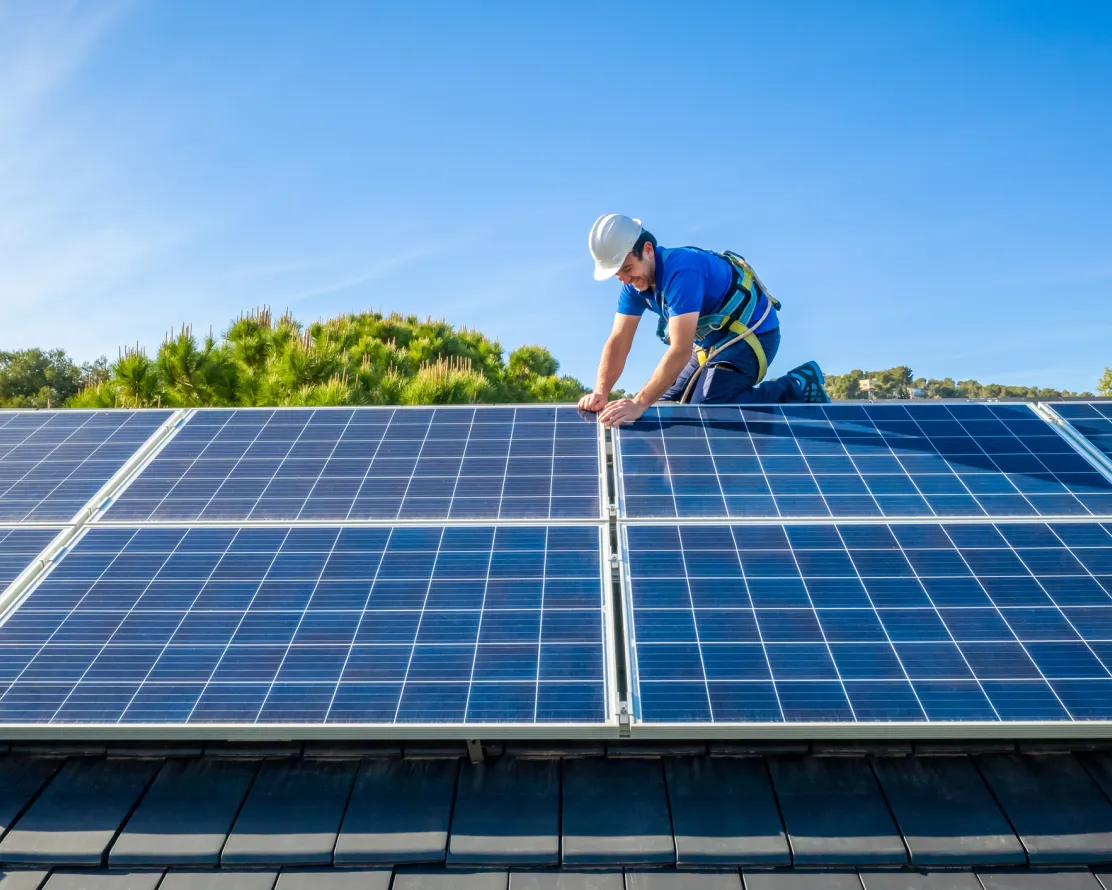
In 2025, the Bonus Casa remains a valid opportunity for those who wish to install a photovoltaic system and make their home technologically advanced and more sustainable. The incentive makes it possible to significantly reduce the initial investment costs by favouring the energy production from renewable sources and self-consumption. In this guide, we give you an overview of the Bonus to find out how to access it and what its advantages are.
What is Bonus Casa 2025?
Bonus Casa, governed by Art. 16-bis DPR 917/86, is an income tax deduction to be spread over 10 years that allows you to recover part of the expenses incurred for maintenance, building renovation and energy upgrade works on residential buildings. The measure was confirmed by the Budget Law 2025 and then detailed in Revenue Agency Circular no. 8/E of 19 June 2025, which clarified requirements, limits and beneficiaries.
The Bonus was created with the aim of encouraging the energy upgrades of Italy's building heritage, incentivising the adoption of low environmental impact technologies and the use of renewables. At the same time, it aims to improve the quality of life of families, with a special focus on low-income households, who are also offered economic support tools and subsidised financing.
As a result of the Budget Law 2025, the planned rates have been updated according to certain deadlines:
- From 1 January to 31 December 2025, a deduction of 50% (in the case of a main home) and 36% (for second homes) on a maximum of EUR 96,000 per property unit is envisaged.
- For 2026 and 2027, the deduction drops to 36% (in the case of a main residence) and 30% (for second homes) always on a maximum of EUR 96,000 per property unit.
All the advantages of Bonus Casa
The Bonus offers a number of economic, environmental and fiscal advantages. Let's see what they are:
- It allows significant savings in energy bills, thanks to the energy efficiency of buildings, especially when combined with the adoption of renewable energy systems, such as photovoltaics.
- It helps to increase the value of the property, making it more modern, sustainable and attractive on the market.
- It encourages the adoption of environmentally friendly technologies and materials, thus reducing CO₂ emissions and contributing to the environmental sustainability targets set by European directives.
- It guarantees solid tax benefits, both in the immediate term, with the possibility of deducting part of the expenses, and in the long term, thanks to the improvement of the building's energy class and the containment of future energy costs.
Photovoltaic panels: deductions of up to 50%
The installation of photovoltaic panels is one of the measures eligible for the Bonus Casa 2025 for energy efficiency in building renovations. Deductible expenses include not only the purchase of the panels, but also labour costs, storage systems, the inverter, cables, switchboards and ancillary masonry work necessary for the installation. The benefit is also available for interventions on common parts of condominium buildings.
For 2025, the deductions are 50% for first homes and 36% for second homes, up to €96,000 per property, divided into 10 annual instalments.
In order to benefit from the bonus, a series of bureaucratic obligations must be complied with, including sending the notification to ENEA (within 90 days of the end of the work), making payments by means of a 'talking money transfer', and keeping all fiscal and technical documentation (invoices, receipts, technical certifications if required).
The Bonus Casa is therefore an advantageous solution for those who wish to invest in photovoltaics and reduce the energy impact of their home, while benefiting from a concrete, long-term financial return.
Are you looking for a photovoltaic offer?
Choose the offers that help you maximize the benefits, with complete management of the connection procedures and activation of the Feed-In Tariff (RID) included.
Who is the Bonus Casa 2025 for?
The Bonus Casa is available to a wide range of subjects:
- Owners, bare owners, usufructuaries and holders of other real rights of enjoyment over the property.
- Tenants and commodataries, provided they bear the expenses, have the invoices, and specify their tax code in the transfers.
- Condominium, for work on common parts.
- De facto cohabitees, provided that they are the holders of the invoices and bank transfers.
All residential properties, both main and second homes, including flats, cottages, detached houses, and common parts of apartment buildings are eligible for the incentive. This also includes property owned by housing cooperatives, property on loan, and rentals, provided that the work is carried out with a regular building permit.
Interventions must comply with the technical and regulatory requirements such as compliance with seismic, energy and town planning regulations. It is also compulsory to make payments by means of a bank transfer and to comply with any technical requirements (e.g. sworn documents, ENEA documentation).
How to Claim the Bonus
To access the Bonus Casa, an orderly and documented technical-administrative procedure must be followed. First of all, before starting work, it is necessary to check which permits or communications are required by the municipality, such as the building permit, SCIA (Certified Notification of Activity Commencement.) or CILA (Certified Notice of Commencement of Works), depending on the type of intervention. It is important to keep all technical documentation, including the declaration of conformity of the installations and any required certifications.
To obtain the deduction, payments must be made exclusively by 'talking' bank or postal transfer, which must contain:
- the reason for the payment referring to Article 16-bis of the Consolidate Tax Law;
- the tax code of the recipient of the deduction;
- the tax code or VAT number of the person receiving the payment (e.g. the fitting company).
Subsequently, for interventions involving energy saving, within 90 days from the end of the work, it is mandatory to send the notification to ENEA through the dedicated portal, completing the file with the technical and fiscal details of the intervention.
The last step to obtain the bonus is the inclusion of the expenses in the tax return (Form 730 or Income PF). It is necessary to keep invoices, transfer receipts, building authorisations, ENEA communication, any technical or energy certifications.
Verify ZIP Code
Enter the ZIP code of the residence for which you want to activate the offer and check if you're eligible. If the result is positive, you can proceed with the subscription.

Ci dispiace! Sembra che il tuo CAP non rientri tra quelli in cui è possibile sottoscrivere l’offerta
Find out what type of Fiber is available at your address
With Enel Energia Fiber, you always surf at the highest speed available. Enter your address and discover the details of your new connection.
Ci dispiace! L’indirizzo che hai inserito non è ancora raggiunto dalla fibra di Enel Energia
In questo momento non è possibile attivare l’offerta sull’indirizzo indicato perché non è raggiunto dalla fibra di Enel Energia. Puoi sempre verificare un altro indirizzo.
Qualcosa è andato storto
Riprova più tardi
By purchasing the air conditioner, you’ve unlocked an exclusive discount code and are entitled to a reward. Enter the code to receive a €360 bill bonus with the Formidabile Luce offer tailored for you.


Formidabile Luce for you
The Formidabile Luce offer includes a discount on the list price of the energy component for customers switching from the Servizio di Maggior Tutela.

Locked for the first 12 months
Commercialization and Sales Fee
12 €/kWh
Air Conditioner at a Formidable Price
Purchase an Enel X air conditioning system with delivery, standard installation, and ENEA paperwork support included.*
Price air conditioner
, month

Standard installation included
ENEA paperwork support included*