

Bill adjustment: what it is and how it works
From estimates to actual consumption. Discover how to check the adjustment, when it arrives and how to manage it with awareness.

The term bill adjustment often generates uncertainty, but it represents a physiological step in the billing cycle of Energy supplies.
It is the recalculation that the supplier carries out to align payments based on estimates with the consumption actually recorded by the meter. Knowing how it works helps you check the amount, understand your rights and, if necessary, act with awareness.
What is bill adjustment and why is it issued?
The adjustment is not an extra expense or a penalty, but an accounting correction. In the Energy market, billing can take place in two main ways: based on recorded consumption, communicated by the distributor or through Self-reading, or on estimated consumption, based on the user’s history.
When actual data is not available for a certain period, the supplier issues bills based on a forecast. The adjustment is triggered when the actual data becomes available.
The issue can lead to two distinct situations:
Debit adjustment: the user pays the difference between what has already been paid and what was actually consumed.
Credit adjustment: the supplier reimburses the excess, usually through a discount on the next bill.
This mechanism applies both to the Power bill and to the gas bill, with some differences linked to how meter data is recorded, and guarantees that each customer pays exclusively for the Energy or gas actually withdrawn from the grid. The transparency of this process is regulated by ARERA, the Regulatory Authority for Energy, Networks and Environment, which establishes precise criteria for consumption reporting.
Power and gas adjustment: differences and causes
The mechanism is the same for both supplies, but the causes and frequency change significantly.
Gas: adjustment is almost routine
For gas, adjustment is frequent. In many cases, gas meters still do not have remote reading: in the absence of a Self-reading communicated by the user, the supplier is forced to rely on estimates. According to ARERA rules, the frequency of official readings depends on annual consumption:
up to 500 Smc, standard cubic metres: actual reading at least once a year;
between 500 and 1,500 Smc: actual reading at least twice a year;
from 1,500 to 5,000 Smc: actual reading at least three times a year;
over 5,000 Smc: actual reading at least once a month.
In the months when an official reading is not carried out, bills are based on estimates. When the actual data arrives, the adjustment is triggered to correct the differences accumulated during the period.
Power: adjustment is increasingly rare
For electricity, the situation is different. Second-generation electronic meters, 2G, allow remote reading by the distributor. In this way, the supplier receives actual data regularly and bills are based on actual consumption. An adjustment on the Power bill can occur in specific cases: meter malfunction, technical delays in data transmission or change of supplier.
| Power | Gas | |
|---|---|---|
|
Remote reading |
Yes (daily for 2G) |
Not always available |
|
Adjustment frequency |
Rara |
Frequent, 1–3 times/year |
|
Preventive tool |
Self-reading, optional |
Self-reading, recommended |
How the adjustment is calculated and how to read it on your bill
The calculation is relatively straightforward: the supplier compares the actual consumption recorded with the sum of the estimated consumption already billed in the same period. The difference is multiplied by the Energy price, net of taxes and system charges.
How to recognize it on your bill:
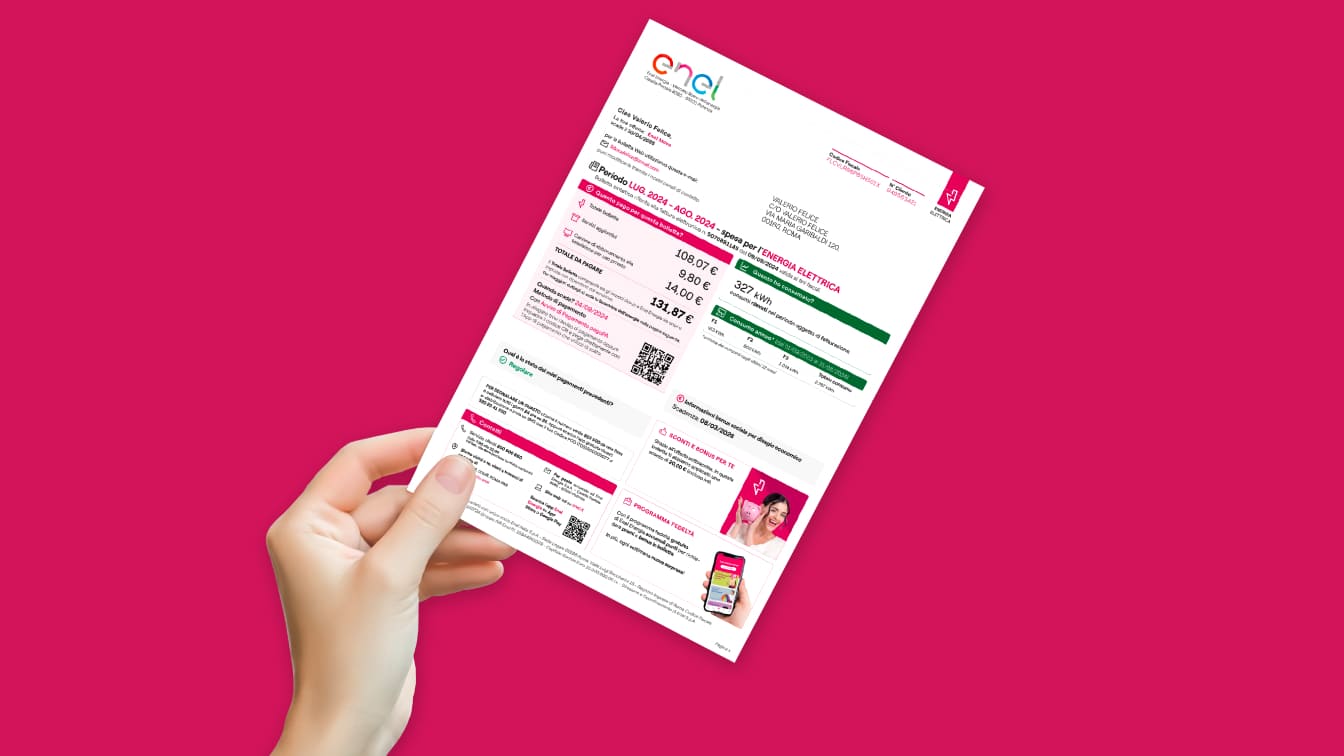
in the Consumption Detail section, the letter S indicates estimated consumption and R indicates actual consumption;
the adjustment appears as a separate item, with a positive amount, debit, or negative amount, credit;
an anomalous amount compared to the average of previous months is a sign not to be ignored.
How to avoid adjustment and what to do if it is too high
The most effective way to reduce the risk of high adjustments is to communicate the Self-reading regularly, within the time windows indicated on the bill. In this way, billing is based on actual consumption, not on estimates.
How to carry out the Self-reading:
read the display of the gas or Power meter;
communicate the data to the supplier via app, online Customer Area, toll-free number or counter;
respect the dates indicated on the bill for correct validation by the distributor.


The 2018 Budget Law, No. 205/2017, introduced the two-year limitation period: the supplier cannot request payment of adjustments relating to consumption that took place more than two years before the bill issue date. This protection came into force at different times for the two supplies:
- Power: starting from 1 March 2018.
- Gas: starting from 1 January 2019.
Bills with a due date before these dates continue to be subject to the previous five-year limitation period.
If the amount is high, it is possible to request payment by instalments. ARERA establishes that this is a customer right in the cases provided for by regulation.
For the Power bill, payment by instalments is mandatory when the adjustment bill exceeds by 150% the average charge of the bills based on estimated consumption that preceded it, or in the event of meter malfunction.
For the gas bill, payment by instalments is mandatory when the adjustment bill is more than double, 200%, the highest amount billed in the bills based on estimated consumption that preceded it, unless the difference is due solely to the seasonal variation in consumption, or in the event of meter malfunction or missed readings with an accessible meter.
In both cases, payment by instalments is not applicable for amounts below €50 and must be requested within the deadlines indicated on the bill.
If a billing error is suspected, it is possible to send a written complaint to the supplier indicating: customer code, POD code for Power or PDR code for Gas, number of the disputed bill and description of the problem.
The available channels include registered letter with return receipt, certified e-mail and online Customer Area. Starting from 1 July 2026, an online form will be available for submitting complaints without the need for registration, as provided for by the new ARERA provisions, Resolution 399/2025/R/com.
The supplier has 30 calendar days to respond to the written complaint. In the event of a response after this deadline, it must pay the customer, in the first useful bill, an automatic compensation of €30.
In the event of no response or an unsatisfactory outcome, it is possible to contact the ARERA Consumer Help Desk to start a free conciliation procedure.

Frequently asked questions
Is it mandatory to pay the adjustment?
Yes. If the consumption shown corresponds to actual consumption and there are no reading errors, the adjustment is due. It is always possible to request payment by instalments from your supplier if the amount is difficult to pay in a single solution.
After how many years does the adjustment expire?
The limitation period is set at two years, but the start dates vary: for Power from 1 March 2018, for gas from 1 January 2019. The supplier cannot request payment of adjustments relating to consumption that took place more than 24 months before the bill issue date.
How can you recognize the adjustment on your bill?
In the “Consumption Detail” section, the letter S indicates estimated consumption and R indicates actual consumption. The presence of the item “adjustment” or “recalculation” indicates that it is an adjustment bill. An anomalous amount compared to the average of previous months is also a sign.
What should you do if you receive an adjustment on your Power bill?
Adjustment on electricity is rare thanks to electronic meters. If you receive one, it is advisable to check that the meter is working properly and verify that there are no billing errors by contacting your supplier’s customer service.
Is it possible to avoid gas adjustment?
Yes. By communicating the Self-reading of the gas meter during the periods indicated by the supplier, the bill is based on actual consumption, significantly reducing the likelihood of receiving a high adjustment at the end of the year.

Was what you read useful? Leave us a review by clicking here 👇
You may also be interested in ...
Verify ZIP Code
Enter the ZIP code of the residence for which you want to activate the offer and check if you're eligible. If the result is positive, you can proceed with the subscription.

Ci dispiace! Sembra che il tuo CAP non rientri tra quelli in cui è possibile sottoscrivere l’offerta
Find out what type of Fiber is available at your address
With Enel Energia Fiber, you always surf at the highest speed available. Enter your address and discover the details of your new connection.
Ci dispiace! L’indirizzo che hai inserito non è ancora raggiunto dalla fibra di Enel Energia
In questo momento non è possibile attivare l’offerta sull’indirizzo indicato perché non è raggiunto dalla fibra di Enel Energia. Puoi sempre verificare un altro indirizzo.
Qualcosa è andato storto
Riprova più tardi
Discounted offer
By purchasing the air conditioner, you’ve unlocked an exclusive discount code and are entitled to a reward. Enter the code to receive a €360 bill bonus with the Formidabile Luce offer tailored for you.

The offer includes a Power contract with a €10 monthly bill bonus for 36 months and an air conditioner starting from €19.90 per month. APR 7.48% and Annual Percentage Rate of Charge 7.74%.
Power

Formidabile Luce for you
The Formidabile Luce offer includes a discount on the list price of the energy component for customers switching from the Servizio di Maggior Tutela.
Locked for the first 12 months
Commercialization and Sales Fee
12 €/kWh
Air Conditioner at a Formidable Price
Purchase an Enel X air conditioning system with delivery, standard installation, and ENEA paperwork support included.*
Price air conditioner
, month

Standard installation included
ENEA paperwork support included*
The offer includes a Power contract with a €10 monthly bill bonus for 36 months and an air conditioner starting from €19.90 per month. APR 7.48% and Annual Percentage Rate of Charge 7.74%.
Power
Formidabile Luce for you
The Formidabile Luce offer includes a discount on the list price of the energy component for customers switching from the Servizio di Maggior Tutela.
Locked for the first 12 months
Commercialization and Sales Fee
12 €/kWh
*The price refers to the energy component only (VAT and taxes excluded) and is locked...