Let’s simplify your choices, together
Do you have questions or would you like to learn more about what you have just read? One of our consultants is available to clarify any doubts and will help you find the ideal product for your needs.


Combining a Photovoltaic system with a heat pump is now one of the most effective choices for reducing domestic Energy consumption. The Photovoltaic system produces electricity from solar irradiation; the heat pump uses it to heat, cool and produce domestic hot water with greater efficiency than traditional systems.
The result is a concrete reduction in bill expenses, greater independence from the grid and a significantly reduced environmental impact.
The Photovoltaic system generates electricity during the hours of greatest solar irradiation, typically between 9 a.m. and 6 p.m., with the production peak concentrated between 11 a.m. and 3 p.m. The heat pump, powered by electricity, can be programmed to operate preferably during those hours, maximizing self-consumption and reducing withdrawals from the grid.
A key indicator of the efficiency of this system is the COP, Coefficient of Performance: for every electrical kWh consumed, a modern heat pump produces on average between 2.5 and 4.5 kWh of thermal Energy, depending on the type and operating conditions. Combined with solar production, this means that the heat generated has a very low operating cost.
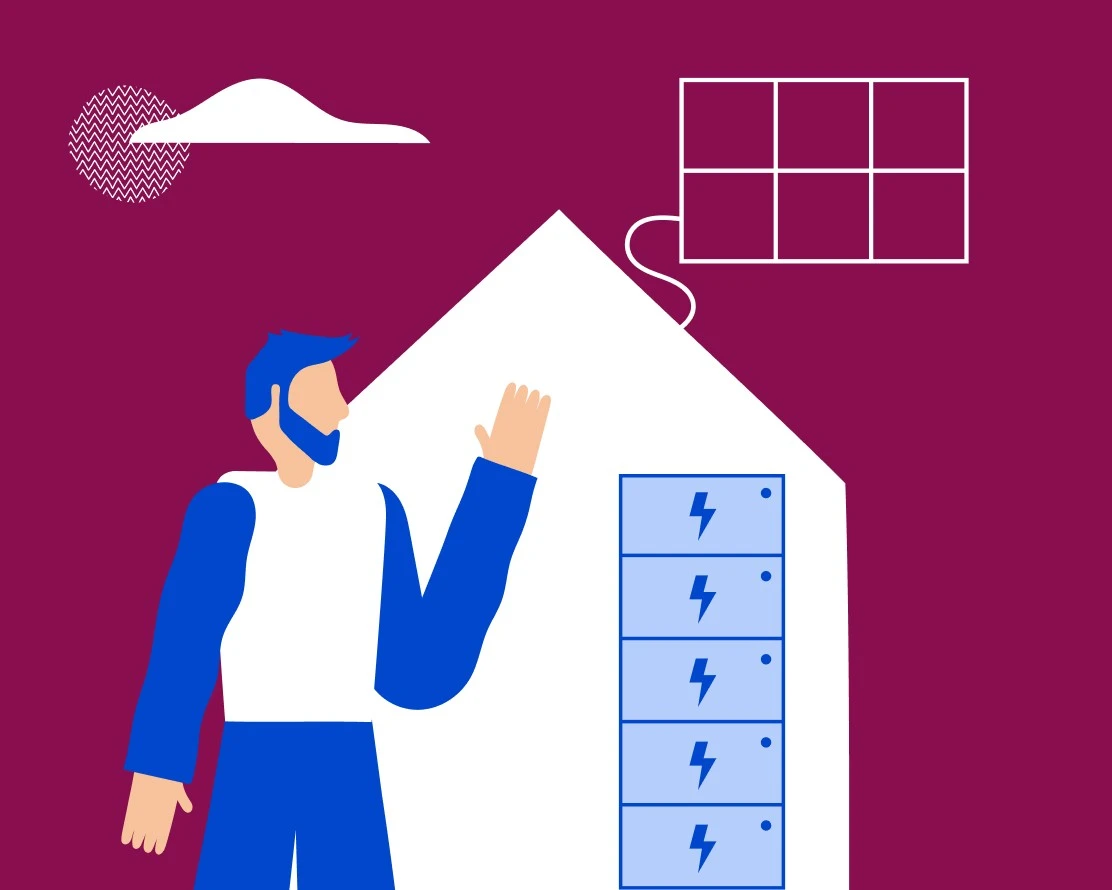
To further optimize the system, it is possible to integrate a storage battery, which stores the excess Energy produced during the day and makes it available in the evening hours or on cloudy days, increasing the share of self-consumption and the Energy autonomy of the home.
The choice depends on the type of home, the existing heat distribution system and the climate zone.
| Type | Heat source | PV compatibility | Ideal for |
|---|---|---|---|
|
Air-to-air |
Outdoor air |
High |
Apartments, single rooms |
|
Air-to-water |
Outdoor air |
High |
Villas, buildings with outdoor space |
|
Geothermal |
Ground heat |
Medium |
Villas, buildings with outdoor space |
|
Water-to-water |
Aquifer or spring |
Medium |
Industrial or rural buildings |
Air-to-water heat pumps are the most widespread in newly built or renovated homes, often combined with underfloor radiant systems that work at low temperature and integrate with the Photovoltaic production profile.
Air-to-air heat pumps, similar to air conditioners, are easier to install and suitable for those who intend to approach this technology with a lower initial investment.
For older buildings or buildings with high heat dispersion, a preliminary assessment is recommended: in some cases, it may be appropriate to consider a hybrid solution, which combines the heat pump with an existing boiler, before proceeding with complete replacement.
The integration of these two technologies produces concrete benefits on several fronts:
savings on your bill: self-consumption of the Energy produced significantly reduces annual Energy costs, with payback times that vary based on system sizing, consumption and current rates;
Energy independence: less exposure to fluctuations in the market price of Energy;
heating and cooling in a single system: the heat pump manages both winter and summer, eliminating the need for gas boilers or separate air conditioners;
production of domestic hot water: heat pumps combined with water systems guarantee hot water with reduced consumption;
reduction of CO₂ emissions: by combining Renewable energies and high efficiency, the environmental impact of the home is substantially reduced;
access to tax incentives: both Photovoltaic and the heat pump are among the technologies eligible for relief. Discover more about Photovoltaic incentives and the Conto Termico 3.0.
Before proceeding, it is useful to assess a few technical and practical aspects:
It must be calibrated based on the home’s actual consumption and the heat pump’s requirements.
An underfloor system or low-temperature fan coil system maximizes the efficiency of the heat pump.
Trees or adjacent buildings can reduce the yield of the Photovoltaic system and must be considered during the design phase.
The integration of a battery increases self-consumption but requires an additional investment.
Monitoring and home automation systems make it possible to optimize consumption during the hours of greatest solar production.
In the presence of landscape or condominium constraints, specific authorizations may be necessary.
Integrating Photovoltaic and heat pump means investing in a complete, efficient and Sustainable Energy system. Whether for heating, cooling or domestic hot water production, these two technologies work in synergy to reduce the costs and environmental impact of the home. With the support of the available incentives and Enel solutions, starting this path is more accessible than ever.

Yes, during the hours of maximum solar production, but not continuously. Integration with a storage battery is recommended to increase the share of self-consumption and guarantee coverage also during night-time hours or on cloudy days.
An air-to-air heat pump transfers heat directly to the air in the rooms, like an advanced air conditioner. An air-to-water heat pump transfers heat to the water in the hydraulic system, powering radiant panels or fan coils. The latter is more versatile and better combined with Photovoltaic for centralized heating.
It is possible to access IRPEF deductions linked to Energy efficiency, Conto Termico 3.0 for the heat pump and any municipal or regional bonuses. It is advisable to check the relief available at the time of installation, since incentive programs are updated periodically.
A 6 kWp system, a typical size for a home with a heat pump, requires an area of 25–40 m² with good exposure, depending on the type of panels. The precise sizing depends on actual consumption and the climate zone.
In many cases, yes, especially in well-insulated homes equipped with low-temperature systems. In older buildings or buildings with high heat dispersion, it may be preferable to evaluate a hybrid solution before proceeding with complete replacement.
Savings depend on system size, consumption, climate zone and Energy rates. A personalized estimate, based on the home’s actual data, is the most reliable starting point for evaluating the investment’s convenience.
Enter the ZIP code of the residence for which you want to activate the offer and check if you're eligible. If the result is positive, you can proceed with the subscription.


With Enel Energia Fiber, you always surf at the highest speed available. Enter your address and discover the details of your new connection.
In questo momento non è possibile attivare l’offerta sull’indirizzo indicato perché non è raggiunto dalla fibra di Enel Energia. Puoi sempre verificare un altro indirizzo.
Riprova più tardi
By purchasing the air conditioner, you’ve unlocked an exclusive discount code and are entitled to a reward. Enter the code to receive a €360 bill bonus with the Formidabile Luce offer tailored for you.

The Formidabile Luce offer includes a discount on the list price of the energy component for customers switching from the Servizio di Maggior Tutela.
Locked for the first 12 months
Commercialization and Sales Fee
12 €/kWh
Purchase an Enel X air conditioning system with delivery, standard installation, and ENEA paperwork support included.*
Price air conditioner
, month

Standard installation included
ENEA paperwork support included*