

Air conditioner maintenance: everything you need to know
Everything useful to know to keep your system efficient, safe and ready in every season.
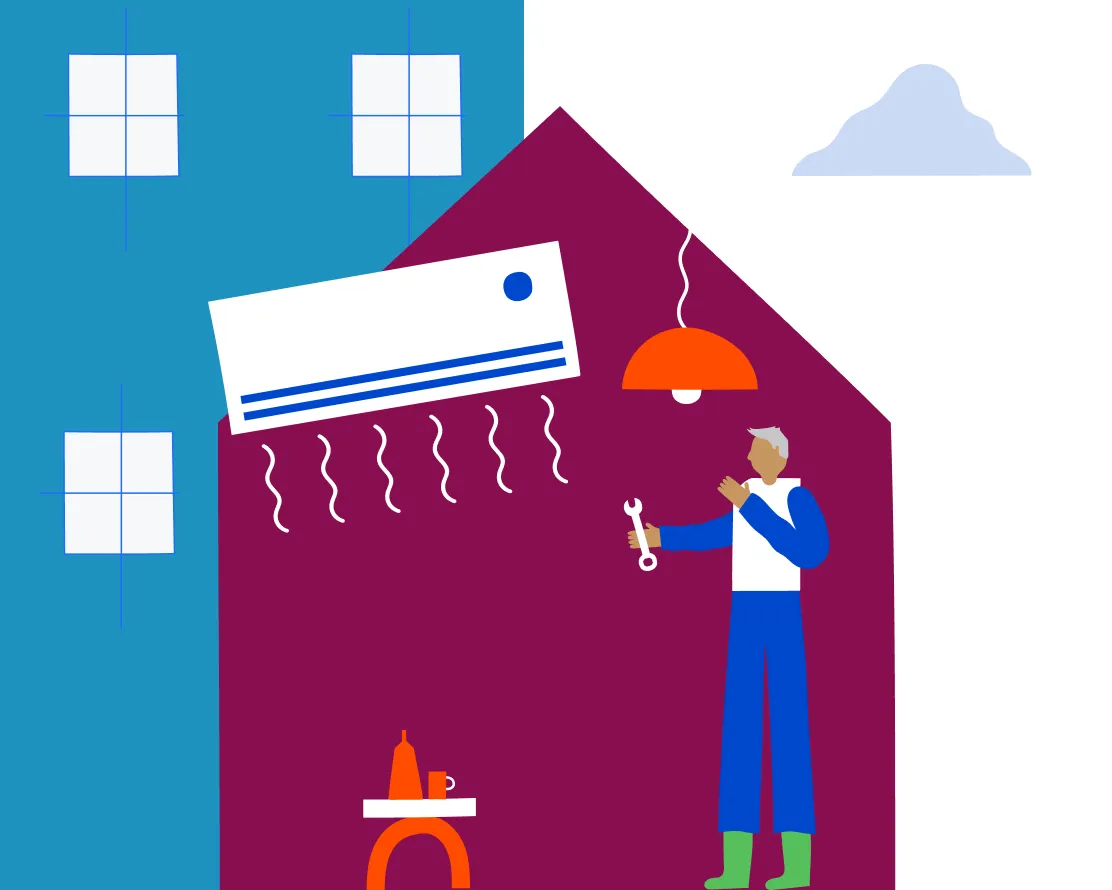
Regular air conditioner maintenance guarantees three concrete results: cleaner air, reduced consumption and a longer lifespan for the appliance. Knowing the necessary operations, their frequency and legal obligations allows you to make more informed choices and save in the long term, whether you already have a system installed or are evaluating a new purchase.
Why air conditioner maintenance is important?
A well-maintained air conditioning system works efficiently and ensures a healthy environment. Dirty filters, for example, force the motor to work harder to move the same amount of air, with a direct impact on consumption. According to ENEA data, a system that is not properly maintained can consume up to 30% more electricity than its factory parameters. Even filters alone have a significant impact: according to the U.S. Department of Energy, regular filter cleaning can reduce air conditioning system consumption by 5% to 15%.
Added to this is air quality: dust, mould and bacteria that accumulate in filters and ducts are recirculated every time the system is switched on. Periodic sanitization of the system is therefore a hygiene measure, not just a technical one, and is particularly relevant for those who suffer from allergies or live with children and elderly people.
Ordinary and extraordinary maintenance: the differences
Not all interventions are the same. It is useful to distinguish between two main categories.
| Type | Operations | Who can do it |
|---|---|---|
|
Ordinary (programmed) |
Filter cleaning, external unit check, grille inspection, sanitization |
Partly do-it-yourself; a certified technician is required for the gas check. |
|
Extraordinary, in the event of a fault |
Compressor replacement, electrical circuit repair, refrigerant gas refill |
Exclusively a specialized technician with F-Gas certification |
Routine maintenance includes all scheduled operations that can be carried out regularly. Some, such as cleaning the filters of the indoor unit, are within everyone’s reach and take only a few minutes. Others, such as checking the refrigerant gas level and checking for any leaks, must be entrusted to a professional.
Extraordinary maintenance, on the other hand, concerns unscheduled interventions that are necessary in the event of a fault or anomaly. In this case, the intervention of a qualified technician is not only recommended: it is mandatory by law when working on components that contain fluorinated gases, F-Gases, substances regulated by European legislation.
How to carry out maintenance: practical operations


It is the most frequent and accessible operation. The filters must be removed, dusted and washed with lukewarm water, using a neutral detergent if necessary. Before reinserting them, it is important to let them dry completely, preferably away from direct sunlight.
The steps to follow are as follows:
disconnect the electrical power supply before any intervention;
carefully remove the front panel of the indoor unit;
remove the filters without forcing them;
remove dust with a dry cloth or a low-power vacuum cleaner;
rinse under running water and dry before reassembly.
The external part of the air conditioner is exposed to dust, leaves and debris that can obstruct the grilles and fan. A periodic check, with cleaning using a damp cloth or vacuum cleaner, is sufficient to ensure correct air flow and prevent overheating.
A drop in performance, when the air conditioner no longer cools as it used to, may be a sign of a gas leak. This check must be carried out by an F-Gas certified technician, who can also proceed with the refill if necessary.
Recommended at least once a year, it eliminates bacteria and mould that develop in ducts and condensate collection trays. It is particularly recommended for systems used in environments with people who have allergies or respiratory conditions.
How often to carry out maintenance: the recommended frequency
The general rule is at least once a year, preferably in spring, before summer switch-on, so the system is ready when needed. If the air conditioner is also used for winter heating, six-monthly maintenance is recommended: once in spring and once in autumn.
| Operation | Frequency | Who carries it out |
|---|---|---|
|
Indoor unit filter cleaning |
Every 1–2 months, during periods of intensive use. |
Do it yourself |
|
External unit check |
Every season |
Do-it-yourself / technician |
|
System sanitization |
Once a year |
Specialized technician |
|
Refrigerant gas check |
Once a year |
F-Gas certified technician |
|
Extraordinary maintenance |
In the event of a fault or anomaly |
F-Gas certified technician |
The system logbook is mandatory for all fixed thermal systems, regardless of the installed capacity: every intervention must be recorded and tracked. For systems with a useful nominal thermal capacity greater than 12 kW, for summer systems, or 10 kW, for winter systems, mandatory periodic Energy efficiency checks are also required. In the event of non-compliance, administrative penalties are provided for pursuant to Presidential Decree 74/2013 and Legislative Decree 192/2005, the amount of which varies according to the type of violation.
Frequently asked question
Is air conditioner maintenance mandatory by law?
The system logbook is mandatory for all fixed thermal systems, regardless of capacity, pursuant to Presidential Decree 74/2013. For systems with a useful nominal thermal capacity greater than 12 kW, for summer systems, or 10 kW, for winter systems, periodic Energy efficiency checks are also mandatory, with administrative penalties provided for by the legislation in the event of non-compliance. Regular maintenance is also strongly recommended for lower-capacity systems for reasons of efficiency and safety.
How often should air conditioner filters be cleaned?
Generally, every one or two months during periods of intensive use. Cleaning can be carried out independently: simply remove the filters, wash them with lukewarm water and let them dry before reinserting them.
What is F-Gas certification and when is it required?
It is a mandatory qualification for technicians and companies that work on systems containing fluorinated greenhouse gases, F-Gases, regulated by Regulation (EU) 2024/573. F-Gases are used as refrigerants in most modern air conditioners. Any intervention on these components, from gas refill to leak repair, must be carried out by certified personnel.
How can you tell if your air conditioner needs maintenance?
The most indicative signs are: the air conditioner takes longer than usual to reach the set temperature, produces unusual noises, emits unpleasant odours or there is an increase in consumption on the electricity bill. In all these cases, it is advisable to contact a qualified technician.
Is it possible to maintain an air conditioner without a technician?
Partly yes. Cleaning the filters and visually checking the external unit are operations that anyone can carry out. Everything relating to the refrigerant gas circuit, electrical components or the replacement of internal parts requires the intervention of a qualified professional with F-Gas certification.

Was what you read useful? Leave us a review by clicking here 👇
You may also be interested in ...

Verify ZIP Code
Enter the ZIP code of the residence for which you want to activate the offer and check if you're eligible. If the result is positive, you can proceed with the subscription.

Ci dispiace! Sembra che il tuo CAP non rientri tra quelli in cui è possibile sottoscrivere l’offerta
Find out what type of Fiber is available at your address
With Enel Energia Fiber, you always surf at the highest speed available. Enter your address and discover the details of your new connection.
Ci dispiace! L’indirizzo che hai inserito non è ancora raggiunto dalla fibra di Enel Energia
In questo momento non è possibile attivare l’offerta sull’indirizzo indicato perché non è raggiunto dalla fibra di Enel Energia. Puoi sempre verificare un altro indirizzo.
Qualcosa è andato storto
Riprova più tardi
Discounted offer
By purchasing the air conditioner, you’ve unlocked an exclusive discount code and are entitled to a reward. Enter the code to receive a €360 bill bonus with the Formidabile Luce offer tailored for you.

The offer includes a Power contract with a €10 monthly bill bonus for 36 months and an air conditioner starting from €19.90 per month. APR 7.48% and Annual Percentage Rate of Charge 7.74%.
Power

Formidabile Luce for you
The Formidabile Luce offer includes a discount on the list price of the energy component for customers switching from the Servizio di Maggior Tutela.
Locked for the first 12 months
Commercialization and Sales Fee
12 €/kWh
Air Conditioner at a Formidable Price
Purchase an Enel X air conditioning system with delivery, standard installation, and ENEA paperwork support included.*
Price air conditioner
, month

Standard installation included
ENEA paperwork support included*
The offer includes a Power contract with a €10 monthly bill bonus for 36 months and an air conditioner starting from €19.90 per month. APR 7.48% and Annual Percentage Rate of Charge 7.74%.
Power
Formidabile Luce for you
The Formidabile Luce offer includes a discount on the list price of the energy component for customers switching from the Servizio di Maggior Tutela.
Locked for the first 12 months
Commercialization and Sales Fee
12 €/kWh
*The price refers to the energy component only (VAT and taxes excluded) and is locked...