
Let’s simplify your choices, together
Do you have questions or would you like to learn more about what you have just read? One of our consultants is available to clarify any doubts and will help you find the ideal product for your needs.


More and more people are having to deal with high bills, heat loss and a building stock that does not meet current standards. Energy redevelopment is the process that makes it possible to improve the Energy performance of an existing building, reducing consumption, cutting emissions and increasing living comfort.
It does not necessarily mean a complete renovation: in many cases, it is enough to intervene on specific systems or components to obtain concrete results.
Energy redevelopment includes all technical interventions aimed at improving the Energy class of a property, namely its ability to consume less Energy with the same level of comfort. The reference parameter is the APE, Energy Performance Certificate: a document drawn up by a qualified technician that captures the Energy status of the building before and after the interventions.
It must be distinguished from simple building renovation: the latter may concern any type of work on the property, while redevelopment has a specific objective, namely reducing Energy requirements. This distinction is also relevant from a tax perspective, because it determines which deductions can be accessed. The European regulatory framework is evolving: the Green Homes Directive, EPBD Directive, sets progressive targets for the decarbonization of residential buildings by 2050, making redevelopment an increasingly less optional topic for those who own older properties.
In Italy, around 50% of the building stock was built before the 1970s, in an era when thermal insulation and system efficiency were not design priorities. The result is a building stock that, according to ENEA data, is responsible for around 40% of national Energy consumption and 36% of CO2 emissions.
Those who live in a property of this type often have to deal with heat loss through walls, roof and window frames, obsolete heating systems and Energy expenses above average. Redevelopment makes it possible to address these problems in a structured way, also enhancing the value of the property on the real estate market. A building with a higher Energy class has a higher commercial value and, in perspective, lower risks of inadequacy with respect to future regulations.
Redevelopment interventions are divided into two main categories: those that act on the building envelope and those concerning the systems. They are often planned in an integrated way to maximize the result.


Building envelope interventions include:
the external or internal thermal coat, to reduce heat loss through walls;
replacement of window frames with double- or triple-glazed models and insulating frames;
insulation of the roof and attic floor, often the building surfaces with the greatest heat loss.
System interventions include:
replacement of the traditional boiler with a condensing boiler, which recovers heat from exhaust fumes;
installation of a heat pump, which transfers heat from the outdoor environment to indoor spaces without combustion;
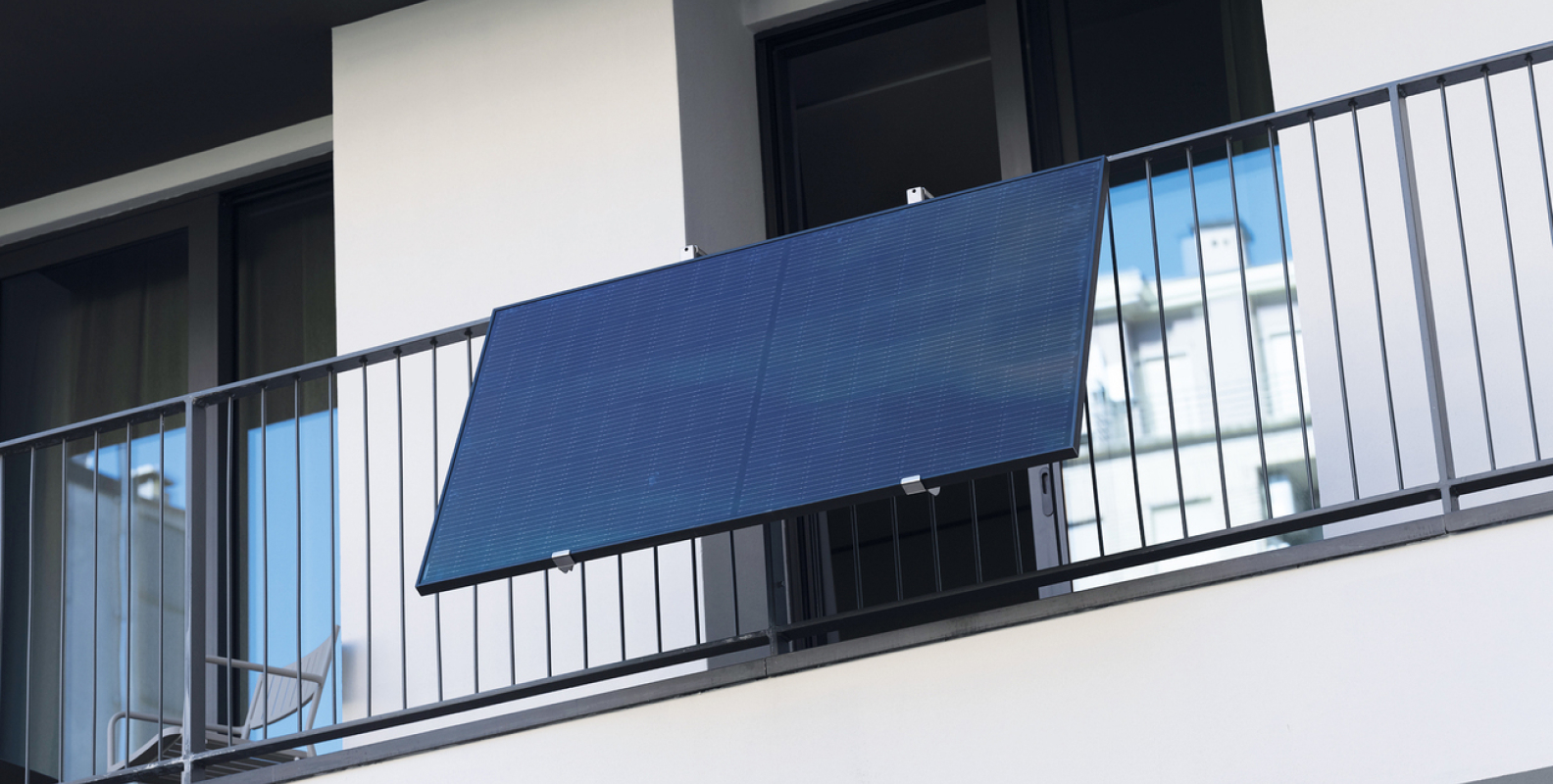
installation of a Photovoltaic system to produce electricity from a Renewable source;
integration of home automation and temperature control systems to optimize consumption based on actual use.
The choice of interventions depends on the analysis of the building’s critical issues: this is why it is useful to start from an Energy diagnosis entrusted to a qualified professional, who indicates where the greatest heat losses are concentrated and which investments have the best cost-benefit ratio.
The installation of a Photovoltaic system represents one of the most widespread interventions in the field of Energy redevelopment, because it acts directly on the main expense item: the electricity consumed by the home. Combined with a storage system, it allows the Energy produced to be used also during evening hours or on days with limited solar irradiation, further reducing dependence on the grid.
For those evaluating this solution, Enel offers a range of Photovoltaic systems designed for different needs. From a tax perspective, Photovoltaic incentives include IRPEF deductions that allow a significant part of the investment to be recovered over the years.
It is worth considering Photovoltaic not as an isolated intervention, but as part of a broader redevelopment plan: combined with a heat pump or boiler replacement, it allows both thermal and electrical consumption to be reduced, maximizing the improvement of the overall Energy class.
The system of incentives for Energy redevelopment in Italy has gone through several phases. Today, the main active tools are:
It applies to specific interventions such as the replacement of window frames, boilers, heat pumps and thermal insulation; the percentages vary according to the type of intervention.
Conto Termico 3.0 is an incentive managed by the GSE aimed at private individuals and public administrations for Energy efficiency interventions and the production of thermal Energy from Renewable sources.
It is included within the scope of the Ecobonus, with specific conditions linked to installed capacity and self-consumption.
A 50% deduction applicable to building interventions that include Energy-related components, according to the conditions provided for by current legislation.
The rates and spending ceilings are subject to annual updates. Before starting any intervention, it is advisable to check the conditions in force with a qualified technician or CAF, also in relation to your family quotient and the type of property.
The first concrete step to start Energy redevelopment is to obtain or update the property’s APE. This document allows you to understand the current Energy class, identify the main critical issues and estimate the expected improvement from the planned interventions. In many cases, it is also a necessary requirement to access tax deductions.
Starting from the APE, it is possible to build a gradual intervention plan, taking into account:
the available budget and the possibility of accessing incentives or financing;
the priority of the interventions based on the expected reduction in consumption, insulation first and systems afterwards, or the opposite if the boiler is at end of life;
the timing to coordinate any building works with system works;
the presence of landscape, condominium or urban planning constraints that may require specific authorizations.

They are two distinct tax categories. Building renovation gives access to the renovation bonus, a 50% deduction, while Energy redevelopment gives access to the Ecobonus, 50% or 65% depending on the intervention. In some cases, a single work may fall into both categories: in that case, the most advantageous deduction is chosen; they cannot be combined on the same intervention.
Yes, with some procedural differences. Interventions on the common parts of the condominium, such as the roof, façade or centralized system, require a meeting resolution and are managed by the administrator. For individual units within the condominium, deductions are requested individually. In both cases, the applicable rates are the same as those provided for single-family buildings.
It depends on the intervention and the starting situation. A heat pump replacing a gas boiler can be amortized in 8–12 years thanks to savings on the bill and tax deductions. A complete thermal coat has longer times, often between 15 and 20 years, but significantly increases the value of the property. The calculation must always be made considering both Energy savings and the tax benefit spread over time.
It is not always a formal preliminary obligation, but it is strongly recommended. The pre-intervention APE is used to document the starting Energy class, which in many cases is a requirement for accessing deductions, for example, the Ecobonus requires an improvement of at least two Energy classes for some types of work. After the works, an updated APE is necessary to certify the improvement achieved.
Yes. A property with a higher Energy class has a higher market value and, when rented, can justify higher rents. In addition, the Green Homes Directive provides that residential buildings progressively reach minimum Energy efficiency standards: those who do not adapt their property could find themselves in a disadvantaged position on the market or subject to future obligations.
Yes, and it is the most common approach. It is not necessary to intervene on everything at the same time: many owners choose to first replace the heating system, a high-impact and often urgent intervention, then insulate the envelope, and finally install a Photovoltaic system. Each phase can independently benefit from the tax deductions available in the year in which the expenses are incurred, in compliance with the applicable spending limits.
Enter the ZIP code of the residence for which you want to activate the offer and check if you're eligible. If the result is positive, you can proceed with the subscription.


With Enel Energia Fiber, you always surf at the highest speed available. Enter your address and discover the details of your new connection.
In questo momento non è possibile attivare l’offerta sull’indirizzo indicato perché non è raggiunto dalla fibra di Enel Energia. Puoi sempre verificare un altro indirizzo.
Riprova più tardi
By purchasing the air conditioner, you’ve unlocked an exclusive discount code and are entitled to a reward. Enter the code to receive a €360 bill bonus with the Formidabile Luce offer tailored for you.

The Formidabile Luce offer includes a discount on the list price of the energy component for customers switching from the Servizio di Maggior Tutela.
Locked for the first 12 months
Commercialization and Sales Fee
12 €/kWh
Purchase an Enel X air conditioning system with delivery, standard installation, and ENEA paperwork support included.*
Price air conditioner
, month

Standard installation included
ENEA paperwork support included*
The Formidabile Luce offer includes a discount on the list price of the energy component for customers switching from the Servizio di Maggior Tutela.
Locked for the first 12 months
Commercialization and Sales Fee
12 €/kWh