

Types of air conditioners: which one to choose for your home
From choosing the model to managing consumption: everything you need to know before purchasing an air conditioner.

With the arrival of hot weather (and not only), choosing the right air conditioner becomes a practical decision that affects daily comfort and the bill.
There are different types of air conditioners on the market, each designed for specific needs: size of the environment, architectural constraints, number of rooms to cool. Knowing them helps you make a more informed choice, avoiding purchases that are oversized or, conversely, insufficient.
Air conditioner and climate control unit: are they the same thing?
Before discussing the types, it is worth clarifying a point that often causes confusion. The terms air conditioner and climate control unit refer to the same appliance.
- Climate control unit is the more technically precise term, because it describes a device that regulates temperature, humidity and air quality.
- Air conditioner is common and widespread usage, but equivalent.
In this article, we will use them as synonyms.
The main types of air conditioners


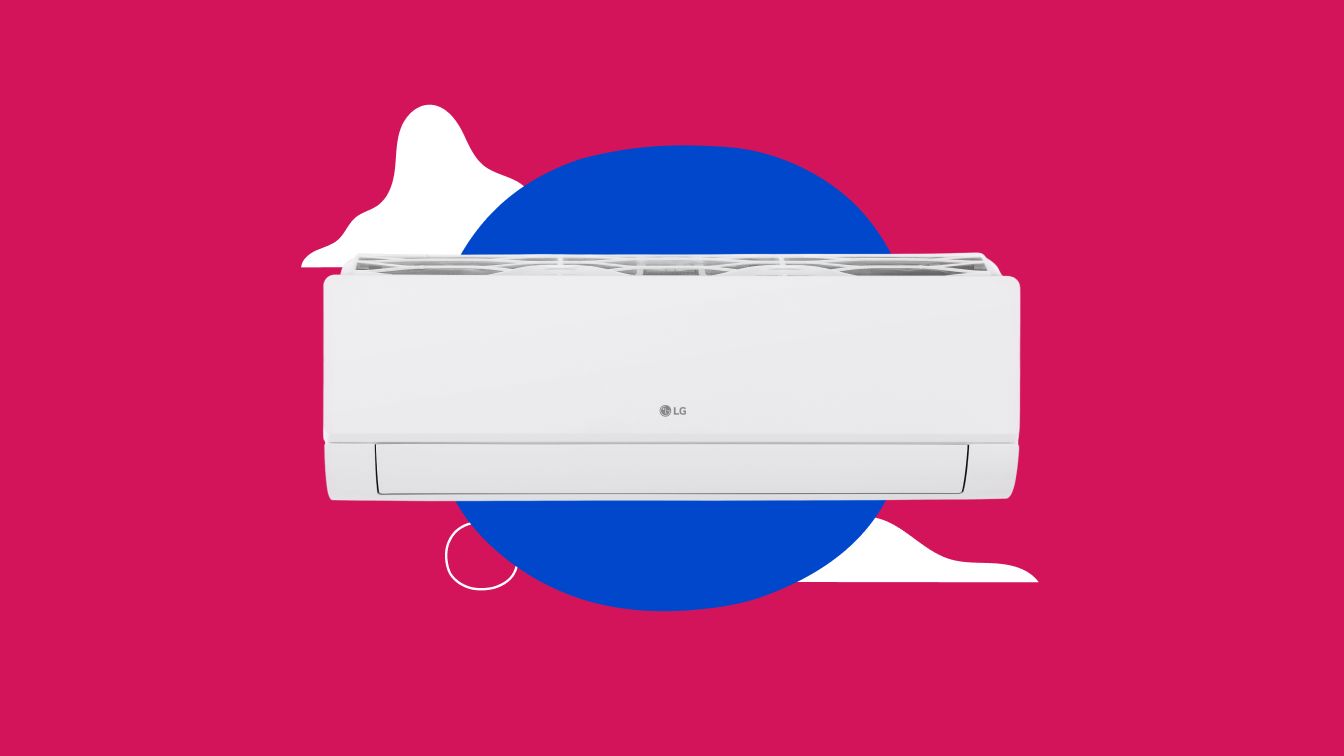
The split air conditioner is the most common solution in Italian homes. It consists of two units: an indoor unit, installed on the wall, and an outdoor unit that expels heat. Within this category, there are three main configurations.
The monosplit consists of an outdoor unit connected to a single indoor unit. It is the ideal solution for those who want to air-condition a single room or an open-plan space. Easier to install and with low consumption, it is the most common choice for studio apartments and compact apartments.
The dual split air conditioner consists of an outdoor unit connected to two indoor units. It allows you to cool two separate environments, such as the living room and bedroom, with a single outdoor motor. Compared to two separate monosplit systems, it reduces external bulk and simplifies maintenance.
The trial split consists of an outdoor unit connected to three or more indoor units. It is suitable for those who need to air-condition several rooms in the home with a single outdoor unit. More expensive during installation, but advantageous for those who cannot or do not want to install several outdoor units.
Types of installation and intended use
| Type | Ideal for | Installation |
|---|---|---|
|
Monosplit |
Single room or open space |
Wall, simple |
|
Dual/Trial split |
Two or more rooms |
Wall, requires technician |
|
Cassette-style |
Environments with false ceilings |
Ceiling, more complex |
|
Ducted system |
Large spaces, multiple floors |
Requires ducts |
|
Without outdoor unit |
Condominium constraints |
Holes in the perimeter wall |
|
Portable |
Temporary use |
No installation |
Inverter technology: why it makes a difference to consumption
Regardless of the type chosen, one of the elements that most affects consumption is inverter technology. Traditional air conditioners switch the compressor on and off to maintain the set temperature. Inverter models, on the other hand, continuously modulate power according to the actual needs of the environment, avoiding the fluctuations and consumption peaks typical of on/off systems.
The result is a more stable temperature, less noise and optimised energy consumption. Inverter models reach the desired temperature more quickly and maintain it more precisely, reducing the impact on the bill over time.
How to choose the right air conditioner
Before purchasing, it is useful to assess a few practical parameters.
Square metres to cool
The power of the air conditioner, measured in BTU, must be proportional to the square metres of the environment. An undersized model always works at maximum capacity, consuming more and cooling poorly.
Amount of rooms
If you want to cool several rooms, a multisplit system is generally more cost-effective than several separate monosplit systems, both in terms of installation costs and external bulk.
Architectural constraints
In historic buildings or condominiums with restrictive regulations, the monoblock without outdoor unit is often the only practical solution.
Energy class
Choosing at least class A++ guarantees a good balance between performance and consumption.
Additional functions
Dehumidification, air purification, Wi-Fi control and scheduled programming are features that improve comfort and help optimise consumption.
Frequently asked questions
What is the difference between air conditioner and climate control unit?
The two terms refer to the same appliance. “Climate control unit” is the more technically precise term, while “air conditioner” is commonly used. Both regulate the temperature, humidity and air quality of an indoor environment.
How much does an air conditioner consume in one hour?
Consumption varies according to the power of the model, measured in BTU, and the energy class. A more powerful air conditioner in a lower energy class will consume significantly more than an equivalent model in class A++ or A+++. Usage habits also have an impact: setting moderate temperatures, no lower than 24–26°C, and making use of scheduled programming are the most effective measures to limit the impact on your bill.
Is monosplit or dual split better?
It depends on your needs. The monosplit is ideal for a single room or an open-plan space. The dual split is more cost-effective if you need to cool two environments, because a single outdoor unit reduces installation costs and bulk.
What should you do if the condominium prohibits the outdoor unit?
In this case, the solution is the air conditioner without an outdoor unit (or monoblock). Heat exchange takes place through holes in the perimeter wall, making installation compatible with condominium and architectural constraints.
Does inverter technology really save money?
Yes. Inverter models modulate power according to actual needs, avoiding the consumption peaks of traditional on/off systems. They reach the desired temperature more quickly and maintain it more steadily, reducing consumption over time.
You may also be interested in ...


Verify ZIP Code
Enter the ZIP code of the residence for which you want to activate the offer and check if you're eligible. If the result is positive, you can proceed with the subscription.


Ci dispiace! Sembra che il tuo CAP non rientri tra quelli in cui è possibile sottoscrivere l’offerta
Find out what type of Fiber is available at your address
With Enel Energia Fiber, you always surf at the highest speed available. Enter your address and discover the details of your new connection.
Ci dispiace! L’indirizzo che hai inserito non è ancora raggiunto dalla fibra di Enel Energia
In questo momento non è possibile attivare l’offerta sull’indirizzo indicato perché non è raggiunto dalla fibra di Enel Energia. Puoi sempre verificare un altro indirizzo.
Qualcosa è andato storto
Riprova più tardi
Discounted offer
By purchasing the air conditioner, you’ve unlocked an exclusive discount code and are entitled to a reward. Enter the code to receive a €360 bill bonus with the Formidabile Luce offer tailored for you.

The offer includes a Power contract with a €10 monthly bill bonus for 36 months and an air conditioner starting from €19.90 per month. APR 7.48% and Annual Percentage Rate of Charge 7.74%.
Power

Formidabile Luce for you
The Formidabile Luce offer includes a discount on the list price of the energy component for customers switching from the Servizio di Maggior Tutela.
Locked for the first 12 months
Commercialization and Sales Fee
12 €/kWh
Air Conditioner at a Formidable Price
Purchase an Enel X air conditioning system with delivery, standard installation, and ENEA paperwork support included.*
Price air conditioner
, month

Standard installation included
ENEA paperwork support included*