

Air conditioner without outdoor unit: how it works
Refresh your home with monoblock air conditioners and preserve the aesthetics of the external façade.
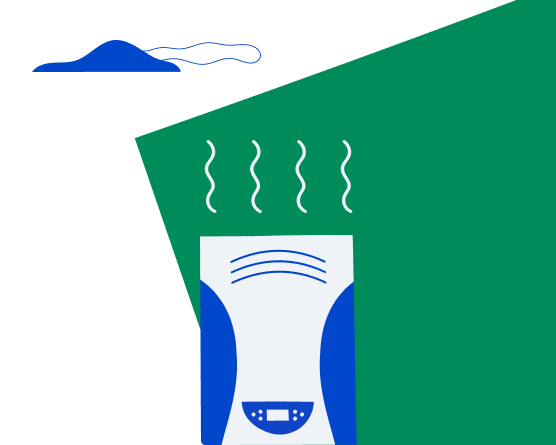
Installing an air conditioner does not have to mean giving up the decorum of the façade or occupying valuable space on the balcony. The air conditioner without outdoor unit, also known as monoblock, was created precisely to respond to architectural and condominium constraints, offering a discreet and effective solution.
Choosing monoblock technology means combining thermal comfort and ease of installation, guaranteeing a cool environment both in summer and in winter, even where traditional systems cannot reach.
How does a monoblock air conditioner work?
The main advantage of the monoblock air conditioner is its structural autonomy: all the technology is enclosed in a single machine body, installed directly inside the home, without the need for a separate outdoor unit.
To understand how it works, it is useful to compare it with the traditional split model, in which the system is divided into two components: an internal part that emits treated air and an external part (the motor) that expels heat. In the monoblock, everything takes place in a single appliance.
Heat exchange with the outside takes place through two holes in the wall with a diameter of approximately 16–20 cm, externally protected by almost invisible grilles. Through these openings, the air conditioner draws in external air to cool the condenser and expels hot air outside. The internal thermodynamic cycle is identical to that of a heat pump air conditioner: the refrigerant gas absorbs the heat from the room and expels it, returning a cool and dry environment in summer. In heating mode, the cycle is reversed: heat is taken from the external air and transferred inside, guaranteeing comfort also in the winter months.
When to choose this solution?
There is no air conditioner that is “perfect” in absolute terms, but there is the one best suited to your needs. The model without outdoor unit is often the most suitable choice in these contexts:
Architectural or historical constraints: in buildings protected by Fine Arts authorities or in historic centres, the installation of external motors is almost always prohibited. The monoblock grilles can be painted like the façade, making them practically imperceptible.
Condominium regulations: some condominiums prohibit the alteration of architectural decorum; this technology solves the problem at the root.
Limited outdoor space: without a balcony or with insufficient space for a traditional motor, the monoblock allows you to air-condition the environment without occupying external surfaces.
Simplified installation: since the cooling circuit is already sealed in the product, it is not necessary to lay copper pipes between inside and outside, making the intervention generally faster.
Advantages, efficiency and maintenance
One of the strengths of the monoblock is accessible maintenance: all components are located inside the room, without having to work on outdoor units in difficult positions. However, to keep efficiency high and reduce consumption, it is essential not to forget cleaning the air conditioner filters, a quick operation that can be carried out independently in just a few minutes.
On the noise front, the latest-generation models have reached levels of silence comparable to a normal fan at minimum power, thanks to the use of advanced sound-absorbing materials. The presence of the compressor inside the appliance, once considered a disadvantage, is now effectively managed by technology.
In addition, to optimise, we recommend adopting intelligent management of air conditioners, setting correct temperatures, using the dehumidification function and, where available, control via app. These precautions reduce consumption without compromising comfort.
Installation: what you need to know
The installation of the monoblock offers concrete flexibility: the unit can be positioned on the wall, high up like a traditional split, or on the floor, in a similar way to a fan-assisted radiator. This adaptability allows the device to be integrated into any type of furnishing without disrupting spaces.
The intervention requires the creation of two holes in the perimeter wall, which must be carried out by qualified technicians with professional equipment. Accurate insulation of the openings is essential to avoid thermal bridges or noise infiltration from outside, which would nullify the advantages of the monoblock. The chosen wall must necessarily communicate with the outside of the building to guarantee correct heat exchange.
Frequently asked questions
Does the air conditioner without outdoor unit consume more?
In terms of efficiency, monoblock models can have slightly higher consumption compared to traditional split systems. This happens because heat exchange takes place through forced ducts, requiring a small extra effort from the system. However, by choosing a model with Inverter technology and a good energy class, the difference in monthly spending remains limited.
Where does it drain the condensate water?
Most modern monoblock air conditioners are designed to nebulise condensate and discharge it outside automatically through the air expulsion holes. In some cases, or for use in heat pump mode, a small drain pipe may be provided, which is always passed through one of the perimeter holes.
How much noise does a monoblock air conditioner make?
The latest-generation technologies use sound-absorbing materials that significantly reduce the noise of the internal compressor. The sound level is comparable to that of a common fan, guaranteeing good acoustic comfort even during the night.
Is it possible to install it on any wall?
No, the air conditioner without outdoor unit must necessarily be installed on a perimeter wall that communicates with the outside of the building. This is essential to allow correct heat exchange and the expulsion of hot air through the holes in the wall.
You may also be interested in ...


Verify ZIP Code
Enter the ZIP code of the residence for which you want to activate the offer and check if you're eligible. If the result is positive, you can proceed with the subscription.


Ci dispiace! Sembra che il tuo CAP non rientri tra quelli in cui è possibile sottoscrivere l’offerta
Find out what type of Fiber is available at your address
With Enel Energia Fiber, you always surf at the highest speed available. Enter your address and discover the details of your new connection.
Ci dispiace! L’indirizzo che hai inserito non è ancora raggiunto dalla fibra di Enel Energia
In questo momento non è possibile attivare l’offerta sull’indirizzo indicato perché non è raggiunto dalla fibra di Enel Energia. Puoi sempre verificare un altro indirizzo.
Qualcosa è andato storto
Riprova più tardi
Discounted offer
By purchasing the air conditioner, you’ve unlocked an exclusive discount code and are entitled to a reward. Enter the code to receive a €360 bill bonus with the Formidabile Luce offer tailored for you.

The offer includes a Power contract with a €10 monthly bill bonus for 36 months and an air conditioner starting from €19.90 per month. APR 7.48% and Annual Percentage Rate of Charge 7.74%.
Power

Formidabile Luce for you
The Formidabile Luce offer includes a discount on the list price of the energy component for customers switching from the Servizio di Maggior Tutela.

Locked for the first 12 months
Commercialization and Sales Fee
12 €/kWh
Air Conditioner at a Formidable Price
Purchase an Enel X air conditioning system with delivery, standard installation, and ENEA paperwork support included.*
Price air conditioner
, month

Standard installation included
ENEA paperwork support included*