Smart roads are road infrastructures equipped with digital technologies that make it possible to collect real-time data, communicate with vehicles and optimize traffic management. This is not a futuristic vision: in Italy, testing has already started on some motorway sections and state roads.


Understanding what they are and how they work also means understanding the direction in which Sustainable mobility is evolving and why the transition toward electric vehicles and connected infrastructures is proceeding hand in hand.

What is a smart road: definition and regulatory framework


The term smart road has a precise definition in the Italian regulatory framework. The Ministerial Decree of February 28, 2018, issued by the Ministry of Infrastructure and Transport and updated in 2020, defines smart roads as road infrastructures undergoing a process of digital transformation with the aim of improving connectivity and the efficiency of the road network. This category includes roads equipped with advanced traffic monitoring systems, data processing models and innovative services aimed at operators, public administration and motorists.


The decree also authorized on-road testing of automated driving vehicles, making Italy one of the first European countries to adopt specific regulations. The regulatory framework provides for the installation of Wi-Fi hotspots in rest areas, IoT networks, weather and traffic sensors and high-speed communication systems, to create an integrated technological ecosystem.

How a smart road works: the underlying technologies


A smart road is not simply a road with a few more cameras. It is a system in which different technological layers work together continuously.


The main technologies that enable its operation are:

IoT sensors (Internet of Things) and cameras

Positioned along the carriageway, they detect traffic flows, weather conditions, the presence of pedestrians, accidents and anomalies. The data is transmitted in real time to a control center.

5G network

It ensures high-speed communication between infrastructure and vehicles, enabling data exchanges with minimal latency, essential for assisted driving and remote monitoring.

C-ITS systems (Cooperative Intelligent Transport Systems)

They enable communication between vehicles (V2V, Vehicle to Vehicle) and between vehicles and infrastructure (V2I, Vehicle to Infrastructure), improving traffic safety and flow.

Dynamic signage

Variable message panels that provide real-time information on diversions, accidents, recommended speed or critical weather conditions.

Big data and artificial intelligence

Algorithms analyze the information collected to predict congestion, optimize flows and support real-time operational decisions.

The operating cycle is continuous: data collection, centralized processing, distribution of information to road users and connected vehicles. A logic similar to that of smart cities, but applied to mobility infrastructure.

Smart roads in Italy: current status and ongoing projects


In Italy, the reference project is Anas Smart Road, launched in line with the guidelines of the Ministry of Infrastructure and Transport. With a total investment of around 1 billion euros, the objective is to equip the country with a road network that is progressively more efficient and open to the challenges of the mobility of the future, from electric power supply to assisted driving.


The sections already involved in the experimental phase include:

  • the state road 51 “di Alemagna” in Veneto;

  • the A90 motorways (Grande Raccordo Anulare of Rome) and A91 (Rome-Fiumicino Airport) in Lazio;

  • the E45-E55 route (Orte-Mestre);

  • the A2 Autostrada del Mediterraneo, where 800 technological poles have been installed with 4K cameras and sensors connected to a centralized control room;

  • the Catania ring road and the A19 (Palermo-Catania) in Sicily.


By 2032, 6,700 kilometers of roads will be involved in the digital transformation. According to data from the Connected Car & Mobility Observatory of the School of Management of the Politecnico di Milano, globally there had been 258 smart road projects since 2015, 141 of which were activated in the 2022-2023 two-year period alone: a clear sign of the ongoing acceleration.

Smart roads and electric mobility: a natural link


Smart roads and electric mobility develop in a parallel and interconnected way. Smart road infrastructures integrate, by definition, the management of charging points, indicating to motorists the charging stations available along the route and optimizing flows based on the type of vehicle.


Those who drive an electric car benefit directly from this ecosystem: V2I communication allows them to receive real-time information on charging stations, waiting times and alternative routes. For those evaluating the switch to electric, it is useful to understand why an electric car is worthwhile, considering factors such as reduced operating costs, lower emissions and greater compatibility with new-generation smart infrastructures.


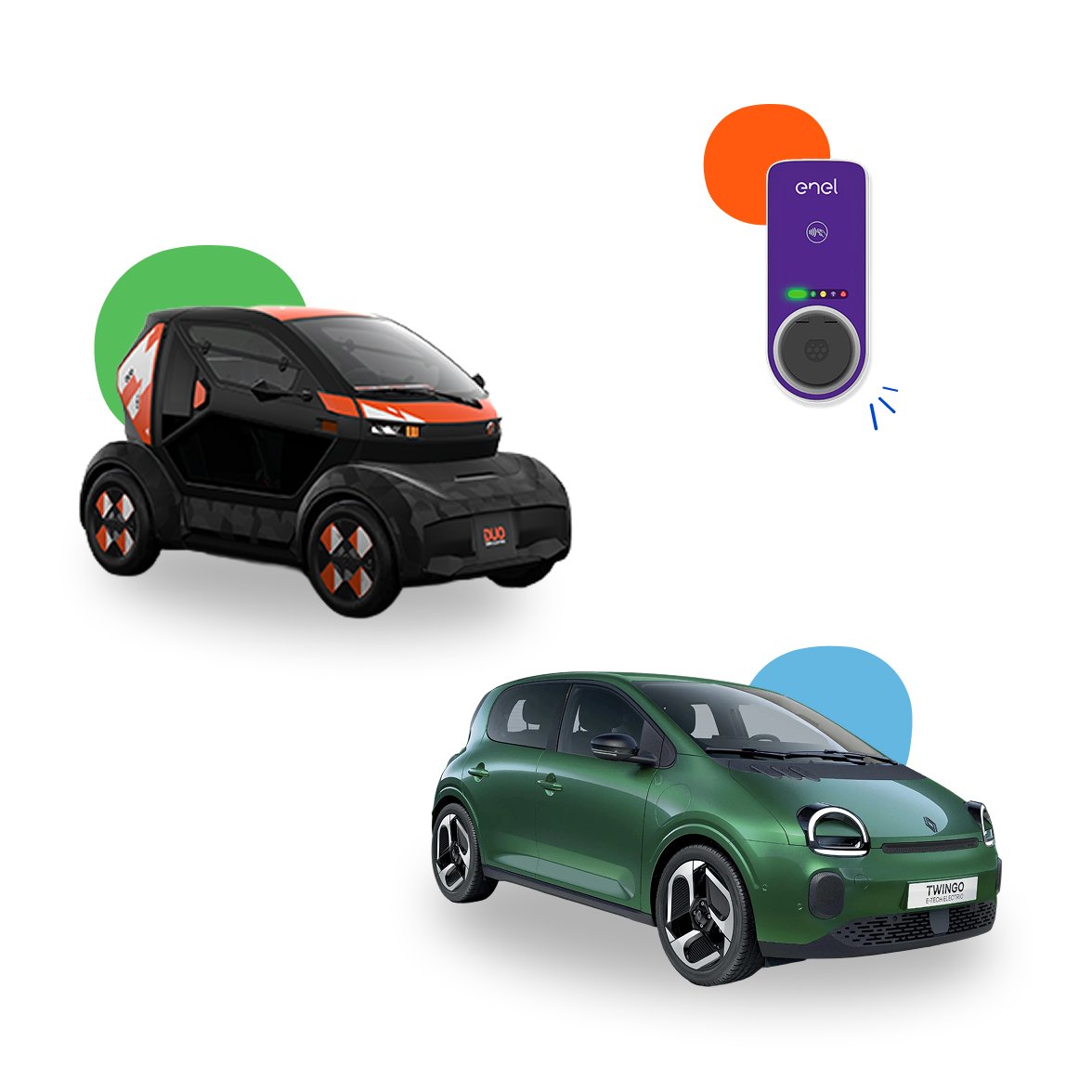
A key element to make the best use of an electric vehicle in this context is having an efficient home charging solution. The Enel Waybox is a wallbox designed for fast and safe charging at home, complementing the use of public infrastructures that smart roads will help make increasingly widespread and accessible.

Why are smart roads also relevant for those who drive today?


It is understandable to wonder whether smart roads are still a matter far removed from everyday experience. In reality, the effects are already emerging: dynamic signage on many Italian motorways, panels indicating travel times updated in real time, and integrated weather alert systems are all elements of a network that is progressively evolving toward the smart model.


The direct benefits for drivers include safer roads thanks to the early detection of accidents and hazards, fewer traffic jams thanks to intelligent flow management, and a more informed driving experience. For those who already have a connected vehicle or are evaluating the purchase of an electric car, convergence with smart roads offers an additional level of integration: the vehicle is no longer an isolated element, but part of an ecosystem that continuously optimizes travel, consumption and safety.

Frequently asked questions

Are smart roads already accessible to ordinary motorists, or do they only concern experiments?

Partly, yes. Some elements of smart roads, such as dynamic signage, variable message panels and real-time alert systems, are already present and usable on several Italian motorway sections. The most advanced experimentation, V2I communication and assisted driving, is still being extended, but the network is progressively expanding toward the target of 6,700 km by 2032.

Does driving on a smart road require a special car or specific equipment?

No, a special vehicle is not required to travel on a smart road. The infrastructures are designed to be compatible with all vehicles in circulation. To make the most of advanced features such as V2I communication or information on charging points, a latest-generation connected or electric vehicle offers additional benefits, but it is not a requirement.

Who manages and finances smart roads in Italy?

The main project is managed by Anas, the public company responsible for the state road and motorway network, under the supervision of the Ministry of Infrastructure and Transport. Funding is mainly public, with a total investment of around 1 billion euros, which includes the installation of sensors, technological poles, communication systems and centralized control rooms.

Smart roads and autonomous driving: are they the same thing?

No, they are not the same thing, although they are closely related. Smart roads are infrastructures: they equip roads with connectivity and data. Autonomous driving, on the other hand, concerns the ability of vehicles to process that data in order to move without human intervention. Smart roads are a necessary condition for large-scale autonomous driving, but they are not sufficient on their own: vehicles must also be equipped with the appropriate systems.

Do smart roads collect data on motorists? Are there privacy implications?

Smart roads collect data on traffic, weather conditions and vehicle flows in aggregate and anonymous form. Sensors and cameras are aimed at infrastructure management, not at identifying people. European data protection regulations, GDPR, also apply to these systems, and operators are required to ensure that data processing complies with the principles of minimization and anonymization.

Is switching to an electric car more worthwhile thanks to smart roads?

Smart roads amplify the advantages of electric cars in several ways. Intelligent management of charging points makes trip planning easier, V2I communication can optimize consumption based on traffic and road conditions, and dynamic signage reduces range anxiety. In a context where infrastructures adapt to the vehicle, choosing electric means positioning yourself consistently with the direction in which mobility is evolving.