

Transition 5.0: what it is and what it provides
We support you in the digital and Sustainable transformation of your business.
The contents of this page refer to a measure whose deadline for submitting new applications was 27/11/2025. If you have already joined and are looking for a technical partner to carry out the planned interventions, we offer you technical and operational support.
What it is
The Transition 5.0 Plan is financed by the PNRR with €6.36 billion and complements the Industry 4.0 Plan by introducing three new objectives: sustainability, resilience and human centricity.
The objective is to help businesses make their production processes more efficient and based on Renewable energies, aiming for a saving of 0.4 million tonnes of oil equivalent between 2024 and 2026. Companies with production facilities in Italy that invested in innovation projects reducing Energy consumption in the years 2024–2025 can access the tax reliefs.
The allocation is divided as follows
Eligible investments
Eligible investments concern new tangible and intangible assets instrumental to business operations.
The tax benefit is linked to a reduction in final Energy consumption (at least 3%) at site level, or Energy savings on the individual process (at least 5%) thanks to investments included in the Industry 4.0 Plan, including:
- Capital goods whose operation is controlled by computerized systems and/or managed through appropriate sensors and actuators;
- Systems for quality and sustainability assurance;
- Devices for human-machine interaction and for improving workplace ergonomics and safety in a 4.0 framework;
- Programs and applications purchased from companies (such as software, systems and system integration solutions);
- Supply chain management systems aimed at drop shipping in e-commerce;
- Software, platforms and applications for logistics management and coordination with highly integrated service activities;
- Software and digital services for immersive, interactive and participatory experiences, 3D reconstructions and augmented reality.
The reduction must be calculated on an annual basis with reference to the Energy consumption recorded in the financial year preceding the start of the investments, net of variations in production volumes and external conditions affecting consumption.
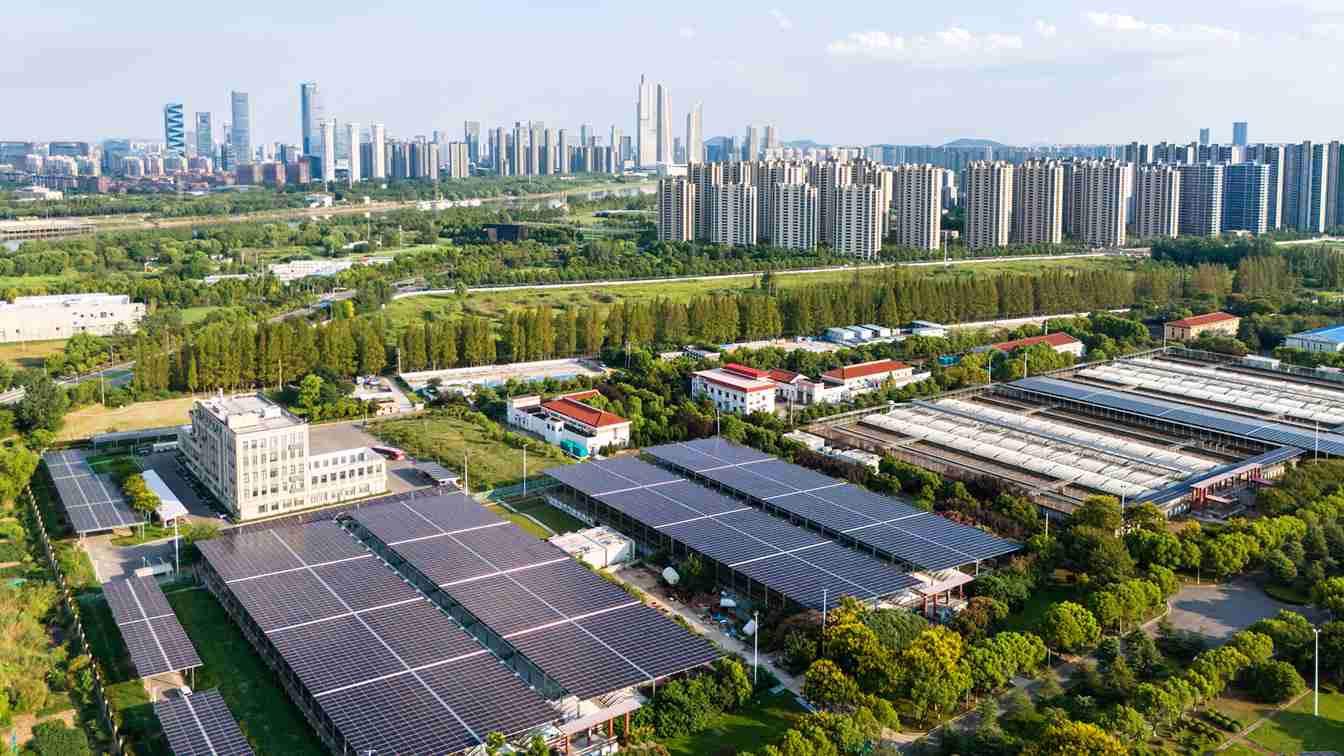
At present, within our portfolio of integrated solutions, and subject to individual verification of feasibility and applicability, we believe that Save Up, one of our Power Quality solutions, may qualify as a leading intervention. Among the driven interventions, Photovoltaic systems, Battery Energy Storage Systems (BESS) and process thermal Energy generation systems may also qualify. Access to these latter interventions requires prior achievement of the Energy consumption reduction target.


The measure provides access to tax credits for companies—regardless of size, legal form, sector or geographical location—that invest in tangible capital goods (which must be new and purchased from suppliers established in Italy) or intangible assets with the aim of reducing their Energy consumption.
The tax credit, in relation to investments made between 1 January 2024 and 31 December 2025, is available to companies investing in digital activities, self-production of Energy from Renewable sources and staff training. The credit increases according to the certified improvement in Energy efficiency, and projects must be certified by an independent assessor through both ex-ante and ex-post certification.
Companies in bankruptcy, voluntary liquidation, compulsory administrative liquidation, composition with creditors proceedings, and companies subject to disqualification sanctions pursuant to Legislative Decree No. 231 of 8 June 2001 are excluded from the benefit.
To access the tax credit provided under the Transition 5.0 Plan, companies must submit an online application using the standardized form made available by the Gestore dei Servizi Energetici (GSE), together with the documentation required by Article 38 of Decree-Law 19/2024 (Transition 5.0 Decree), as well as a communication describing the investment project and its cost.
Companies must submit:
- Ex-ante communication (credit reservation) including a description of the investment project and its cost;
- Ex-ante certification attesting the Energy consumption reduction achievable through investments in the assets.
Following the approval by the Chamber of Deputies of the conversion bill of Decree-Law No. 39 of 29 March 2024, on 22 May 2024, it was also established that within 30 days of the reservation confirmation by the GSE, companies must communicate that orders accepted by the supplier have been placed, through the payment of a deposit of at least 20% (both for the leading capital goods and for the Renewable component), under penalty of losing the benefit.
Each month, the GSE sends the Ministry of Enterprises and Made in Italy the list of applicant companies and the amount of the reserved credit, verifying the availability of funds. Companies, in turn, submit periodic communications to the GSE regarding the progress of the investment, on the basis of which the amount of the tax credit that can be used is determined, up to the maximum amount reserved. Once the formal correctness of all documentation has been verified, the GSE sends the Ministry the list of companies eligible for the incentive.
As regards the use of the tax credit, companies must also submit electronically to the GSE:
- Ex-post communication regarding the completion of the investments;
- Ex-post communication certifying the actual implementation of the investments in accordance with the provisions of the ex-ante certification.
All certifications, both ex-ante and ex-post, may be issued by EGE (Energy Management Experts) certified according to UNI CEI 11339 and ESCo (Energy Service Company) entities certified according to UNI CEI 11352. For SMEs, the costs incurred to comply with the certification obligation are recognized as an increase in the tax credit, up to a maximum amount of €10,000.
The rates
The percentage rates of the 2024 and 2025 tax credit, applicable according to investment volumes and results in terms of Energy saving, are divided as follows.
| INVESTMENT RANGE | Production unit: 3%–6% / Process concerned by the investment: 5%–10% | Production unit: 6%–10% / Process concerned by the investment: 10%–15% | Production unit: >10% / Process concerned by the investment: >15% |
|---|---|---|---|
|
0 - 10 mln € |
35% |
40% |
45% |
|
10 - 50 mln € |
5% |
10% |
15% |
The approved amendments introduce an expenditure limit for storage systems and Photovoltaic systems. The limit will be established by the implementing decrees and will require proportionality between the Energy delivered and the tax relief on the expenditure. The greater the power of the Photovoltaic system, the higher the limit on the expenditure tax relief.
Discover the other services






Verify ZIP Code
Enter the ZIP code of the residence for which you want to activate the offer and check if you're eligible. If the result is positive, you can proceed with the subscription.


Ci dispiace! Sembra che il tuo CAP non rientri tra quelli in cui è possibile sottoscrivere l’offerta
Find out what type of Fiber is available at your address
With Enel Energia Fiber, you always surf at the highest speed available. Enter your address and discover the details of your new connection.
Ci dispiace! L’indirizzo che hai inserito non è ancora raggiunto dalla fibra di Enel Energia
In questo momento non è possibile attivare l’offerta sull’indirizzo indicato perché non è raggiunto dalla fibra di Enel Energia. Puoi sempre verificare un altro indirizzo.
Qualcosa è andato storto
Riprova più tardi
By purchasing the air conditioner, you’ve unlocked an exclusive discount code and are entitled to a reward. Enter the code to receive a €360 bill bonus with the Formidabile Luce offer tailored for you.


Formidabile Luce for you
The Formidabile Luce offer includes a discount on the list price of the energy component for customers switching from the Servizio di Maggior Tutela.
Locked for the first 12 months
Commercialization and Sales Fee
12 €/kWh
Air Conditioner at a Formidable Price
Purchase an Enel X air conditioning system with delivery, standard installation, and ENEA paperwork support included.*
Price air conditioner
, month

Standard installation included
ENEA paperwork support included*
Formidabile Luce for you
The Formidabile Luce offer includes a discount on the list price of the energy component for customers switching from the Servizio di Maggior Tutela.
Locked for the first 12 months
Commercialization and Sales Fee
12 €/kWh